Page :
1 | 2 |
3 |
4 |
5 |
6 |
7 |
8 |
9
More Information
In the GCC, valves aren't just "parts"—they are the gatekeepers of the region’s economy. Whether it's managing the massive pressure of a Saudi oil field or keeping a desalination plant in Dubai running 24/7, choosing the right valve is often the difference between a smooth operation and a multimillion-dollar shutdown.
Here is a breakdown of the valve landscape across the Gulf as of 2026.
1. Common Types & Their Roles
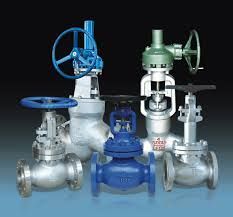
In this region, the "Big Three" dominate because of their durability in extreme heat and high-pressure environments.
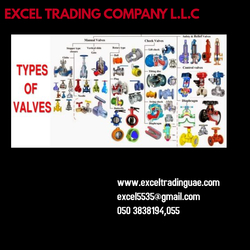
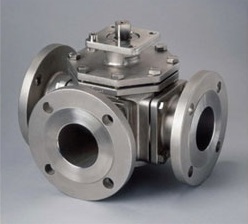
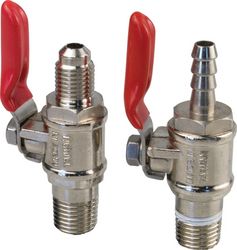
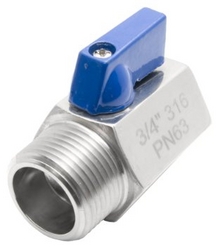
Ball Valves: These are the workhorses of the GCC. They offer quick, quarter-turn shutoff and are virtually everywhere, from upstream oil rigs to gas processing units.
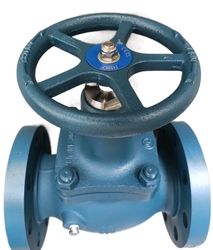
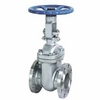
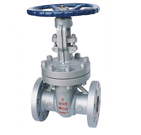
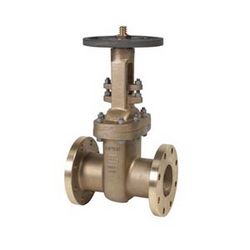
Gate Valves: Used primarily for isolation. You’ll find these on cross-country pipelines in Saudi Arabia and Oman. They aren't meant for throttling; they are either fully open or fully closed.
Butterfly Valves: These are massive in the Water & Desalination sector. They are lightweight, cost-effective, and take up very little space, making them perfect for the high-volume, low-pressure water systems used in plants like Jebel Ali or Taweelah.
Check Valves (Non-Return): Essential for protecting pumps. In the massive water injection systems used to maintain pressure in GCC oil fields, these prevent backflow from destroying expensive equipment.
2. Industries & Harsh Reality
The GCC is arguably the toughest environment in the world for a valve. We don’t just deal with pressure; we deal with "Sour Gas" (high H2S content) and extreme salinity.
Oil & Gas: Upstream projects in the Empty Quarter or the North Field (Qatar) require specialized alloys like Inconel or Duplex Stainless Steel to survive corrosion.
Desalination & Power: The UAE and Saudi Arabia are global leaders here. The high salt content of the Arabian Gulf water means valves must be lined (often with PTFE or PFA) to prevent the metal from literally being eaten away.
Hydrogen & Green Energy: A new trend for 2026. As Oman and the UAE invest in Green Hydrogen, we are seeing a spike in demand for "Zero Leakage" bellows-sealed valves.
3. Maintenance: Predictive is the New Standard
Maintenance in the Gulf has moved away from "wait until it breaks." Because of the extreme heat (reaching 50°C plus), seals and gaskets degrade faster than in Europe or the US.
Smart Monitoring: Most new installations in 2026 use IoT-enabled actuators. These send alerts to a control room in Riyadh or Abu Dhabi before a valve fails, measuring torque and stem position in real-time.
Local Refurbishment: You don't send valves back to the manufacturer anymore. Major hubs like Mussafah (Abu Dhabi), Jebel Ali (Dubai), and Dammam (Saudi) have world-class repair shops that can strip, re-clad, and test a valve to API standards in days.
4. Pricing & Availability (2026 Update)
The market in early 2026 is seeing some "red-hot" dynamics:
Factor Current Status
Pricing Up by 10-15% compared to 2024. This is due to rising raw material costs (nickel/chrome) and shipping surcharges.
Availability Tight. Major players like Aramco and ADNOC are "pre-ordering" massive inventories for their 2030 expansion goals, which can leave smaller contractors waiting.
Lead Times Standard carbon steel valves are available in 2-4 weeks. High-alloy or specialized control valves can take 24-36 weeks.
Local Stock Saudi Arabia (through IMI) and the UAE have significantly increased local manufacturing. Look for "Made in UAE" or "Made in KSA" labels to bypass shipping delays.
Pro Tip: If you are sourcing in the UAE, check the industrial zones in Sharjah (Sajaa) or Abu Dhabi (ICAD). They often hold "buffer stocks" of standard API 6D valves that aren't listed on the major global portals.